Volunteering in Copenhagen: What I Learned Beyond the Classroom
Volunteering during a study abroad semester is often framed as a “nice addition”—something you do if you have extra time, or something that looks good on a CV.
For me, it became something else entirely.
It was a way to understand the city beyond lecture halls, to engage with the very issues I was studying, and, perhaps most importantly, to feel grounded in a place that initially felt unfamiliar.
During my semester in Copenhagen, I volunteered—irregularly, imperfectly—with two organizations. I didn’t do nearly as much as I thought I would. But what I did experience changed how I think about learning, impact, and presence.
Starting Point: Where to Look (and When to Start)
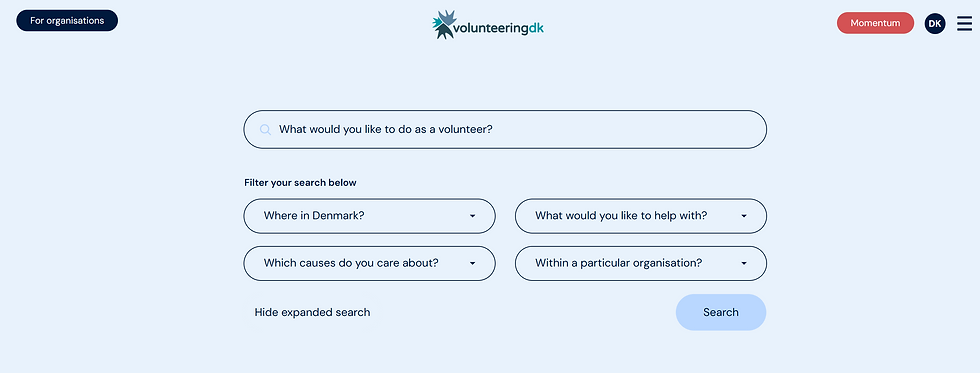
If you’re considering volunteering in Copenhagen, a good place to begin is Volunteering.dk. It’s a platform that gathers opportunities across the city and allows you to filter based on your interests, availability, and language skills.
If I could do one thing differently, it would be this: start early.
I hesitated at the beginning of the semester—partly because I was adjusting, partly because I underestimated how quickly time would pass. Between classes and study tours, the semester fills up fast. That initial hesitation probably cost me a full month of potential involvement. At the same time, there’s a balance to strike. You’re not just living in Copenhagen—you’re traveling, studying, and building a life. Volunteering should fit into that rhythm, not overwhelm it.
Muhabet: The Value of Simply Being There
Most of my volunteering took place at Muhabet, a community space in Nørrebro that supports people living with trauma and mental illness, particularly those with refugee and immigrant backgrounds. Muhabet is built around a simple but powerful idea: everyday life matters. It offers a safe, flexible environment where people can participate at their own pace—whether that means sharing a meal, playing a game, or just sitting with others. And that’s exactly what I did.
I played board games (and occasionally won). I helped in the kitchen—mostly cutting bread. Sometimes I translated between Arabic and English. But more than anything, I sat, talked, and listened. It didn’t feel like “work.” It didn’t feel like impact in the way we’re taught to measure it. But it mattered.

There’s something grounding about being in a space where no one expects you to perform expertise—where presence is enough. Where conversations drift between the mundane and the meaningful. Where community is not a concept, but something you feel. One of the things I value most from that time is a small accessory gifted to me by a Palestinian guest. It’s not something I can easily explain on a CV. But it holds more meaning than anything I could list.
Night Light Café: Seeing the City Differently
My second volunteering experience looked very different.
I joined Night Light Café—but only once. Not because I didn’t want to continue, but because I reached out too late. By the time I applied, I had to wait for the next training session, and my semester timeline didn’t allow for long-term commitment.
Still, that one night stayed with me.

Night Light Café works with migrant women in sex work, offering a space of rest, conversation, and support. Operating late at night in Vesterbro, it also includes outreach, meeting women where they are, literally and figuratively. Volunteering there meant stepping into a part of Copenhagen I hadn’t experienced before. At night. On the streets. In conversations that felt both ordinary and heavy at the same time. As someone taking a class on human trafficking, I had spent weeks engaging with these issues academically—through case studies, legal frameworks, and policy debates. But this was different. It was a reminder that behind every “issue” is a person. A conversation. A moment of eye contact. A life that cannot be reduced to a category.
What I Wish I Knew (and What I’d Tell You)
If you’re thinking about volunteering during your study abroad, here’s what I’d say:
Start early. Even if you’re unsure, reach out. You can always adjust later.
Be realistic. You won’t be there every week. And that’s okay.
Go with friends if you can. It makes showing up easier—especially at the beginning.
Let go of the idea of “impact.” Some of the most meaningful moments won’t feel productive in the traditional sense.
Be present. That’s often more valuable than you think.
Learning Beyond the Classroom
Volunteering didn’t replace what I learned in class; it deepened it.
It gave context to abstract concepts. It challenged assumptions. It made everything feel more immediate, more human, more complicated. And maybe that’s the most important part. Because studying migration, trauma, or human trafficking from a distance can create a false sense of understanding. Volunteering, even in small ways, disrupts that distance.
It reminds you that learning is not just about analysis.
Sometimes, it’s about showing up.


Comments